Ubisoft's Restructuring Bears Fruit as Black Flag Resynced Beats Expectations
Ubisoft's half-year earnings show its new Creative House structure paying off, with Black Flag Resynced beating forecasts and Rainbow Six Siege rebounding.

Ubisoft closed the first half of its 2026-27 fiscal year on November 19 with the clearest sign yet that its year-long reorganization is working. In its official earnings release, the publisher reported net bookings of €644.7 million for the six months to the end of September, down 16.5% year-over-year overall, but with the second quarter alone beating its own guidance thanks to one game: Assassin's Creed Black Flag Resynced.
The remake, which launched on PC, PlayStation 5 and Xbox Series X|S in July, pulled Q2 net bookings to €389 million against a forecast of around €370 million. Ubisoft said performances from the rest of its catalog, including the wider Assassin's Creed library, the Ghost Recon franchise and mobile hit Invincible: Guarding the Globe, were "strong" and that bookings excluding partnership revenue were up more than 50% year-over-year.

Black Flag Resynced Becomes the Franchise's Benchmark
Ubisoft's release calls Black Flag Resynced's commercial performance one of "the industry's most successful Action-Adventure remakes," crediting solid in-game spending and a higher-than-expected share of premium edition sales. The publisher's own newsroom had already tracked the game's early momentum: it passed 3 million copies sold within its first week, a pace Ubisoft says exceeded its full-year expectations for the title in a matter of days.
The rest of the Assassin's Creed catalog rode that momentum too. Ubisoft pointed to Assassin's Creed Odyssey benefiting from a summer movie tie-in, and said Assassin's Creed Valhalla has now passed 40 million players, a milestone the publisher is framing as a launchpad for the franchise's 20th anniversary next year.
Rainbow Six Siege's Quiet Rebound
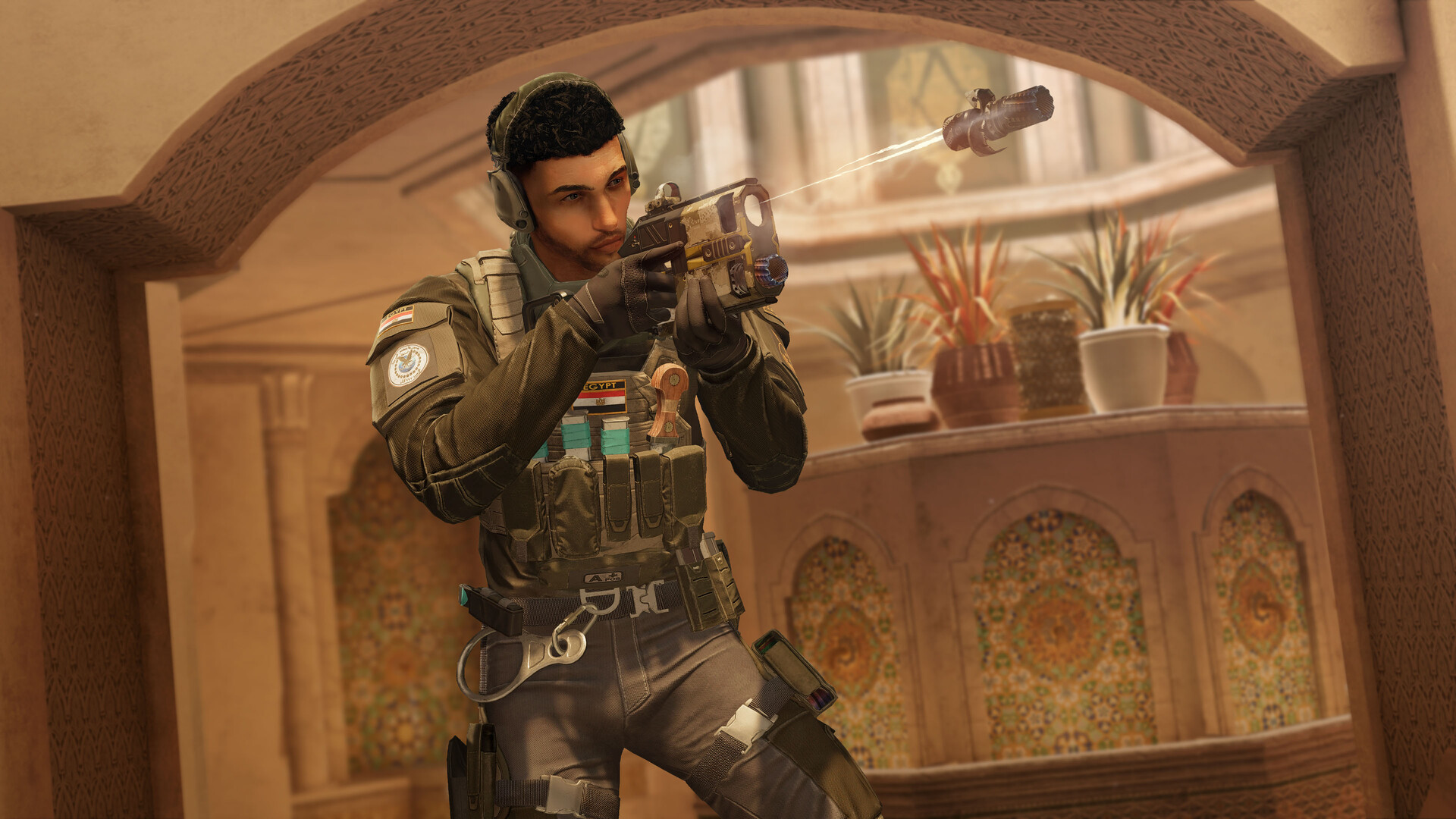
Away from Assassin's Creed, Ubisoft highlighted Tom Clancy's Rainbow Six Siege as the half's other bright spot. The team refocused the game on its "tactical, competitive core" after the Ranked 3.0 adjustments rolled out from mid-July, and the publisher says Siege ranked inside the top 10 games across Xbox and PlayStation combined by monthly active users over the half. Session days were reported to be growing 50% year-over-year quarter-to-date heading into November, even against what Ubisoft called a highly competitive release slate. A fourth season is due in early December, with Year 12 set to bring four new Operators across the year ahead.
“Our new operating model is now fully in place, with leadership secured across all Creative Houses. Its first benefits are already visible, with the commercial success of Assassin's Creed Black Flag Resynced and the renewed momentum of Rainbow Six Siege.”Yves Guillemot, Co-Founder and Chief Executive Officer, Ubisoft
Motherbrain Becomes a Dedicated Subsidiary
The results also mark a structural turning point. Ubisoft confirmed that its new operating model, built around semi-autonomous "Creative Houses" each accountable for their own profit and loss, is now fully staffed after an external general manager was named to lead Creative House 4, joining in January. Creative Houses 3 and 5, both focused on live-service and cross-platform experiences, have been merged under a single leadership structure.
Alongside that, Ubisoft has spun out Motherbrain, the internal team behind its Teammates generative AI prototype, into its own dedicated subsidiary. The company describes Motherbrain's mandate as building proprietary technology for new gameplay systems, including NPCs with persistent memory and AI-driven world management, with an eye toward partnerships beyond Ubisoft's own studios. A separate unit was also created to manage brands that sit outside the five Creative Houses.
Cost Cuts Continue as the Balance Sheet Improves
Ubisoft said its third-phase cost reduction program remains on track toward a €1.25 billion fixed cost base by March 2028. Its fixed costs fell 6% year-over-year to €660 million for the half, with headcount down by close to 1,100 employees across the same period. Non-IFRS net debt dropped sharply to €541.4 million from €1.15 billion a year earlier, after the Tencent-backed Vantage Studios joint venture marked its first full year of operation on October 1.
Ubisoft co-founder and chief executive Yves Guillemot tied the quarter's results directly to that restructuring. "Our new operating model is now fully in place, with leadership secured across all Creative Houses," he said in the earnings release. "Its first benefits are already visible, with the commercial success of Assassin's Creed Black Flag Resynced and the renewed momentum of Rainbow Six Siege."
What Comes Next
Ubisoft reaffirmed its full-year targets for FY2026-27 and said it is still working through a two-part refinancing plan intended to extend its debt maturities, with the second stage expected to launch "shortly." On the release side, the publisher used the update to reiterate its Gamescom announcements of Rainbow Six Tactics and a Heroes of Might and Magic III remake, both targeting 2027, alongside the launch of The Player Council, a new program for testing in-development PC titles directly with the community.
For a publisher that spent much of the past two years absorbing layoffs, delays and a rocky Star Wars Outlaws launch, a quarter built on a genuine commercial hit and a live-service game rediscovering its footing is the first real evidence that Ubisoft's bet on smaller, more accountable studio units is paying off, at least for now.
Official links
Theo covers the business of games for Gamers6: studio moves, platform strategy and the press releases nobody else finishes reading. He files most days before the coffee is cold.