How to Pick Your First Class in Deep Rock Galactic: Survivor on PS5 and Switch
Deep Rock Galactic: Survivor has landed on PS5 and Nintendo Switch. Here is how new miners should pick a class and survive their first few dives into Hoxxes.
Rock and stone, new recruits. Deep Rock Galactic: Survivor spent nearly two years as a PC and Xbox favorite before Funday Games and Ghost Ship Publishing finally brought it to PlayStation 5 on October 7 and to Nintendo Switch and Switch 2 on October 9, opening the auto-shooter spin-off to a huge new console audience this week. If you just downloaded it off the strength of that launch, the single-player, top-down shooter asks you to balance four very different dwarf classes, a ticking extraction clock and a mining economy, and the early hours can be rough if you don't know what to prioritize first.
This guide covers the choices that matter most in your first few runs: which class to lean on while the rest stay locked, how the mining-and-extraction loop actually rewards patience, and where to spend your first upgrade points. It also looks ahead to the free Knockout content update and its paid Brawler expansion, which Funday Games has confirmed is coming to every platform, console included.
Start as the Scout, Even If You Don't Plan to Stay There
Every new save begins with only the Scout unlocked. That's not a punishment: the Scout's starting kit rewards exactly the instincts a first-time player needs, since the auto-shooter aiming means your real decisions are about positioning and when to commit to a fight rather than where to point a reticle. Scout trades survivability for mobility and a heavy critical-damage bonus, which teaches you to keep moving through a horde instead of planting your feet and tanking hits.
The other three classes unlock as you level your profile rather than any single class: Gunner opens at player rank 3, Engineer at rank 5, and Driller at rank 7. Each of the four keeps the base Deep Rock Galactic dwarf's identity. Gunner carries the most armor and health of the four and is built to stand in the open and out-shoot a swarm. Once you unlock it, lean on it for missions where you expect to get boxed in, since it covers for a bad position far better than Scout can.
Treat Nitra and the Extraction Timer as Your Real Enemy
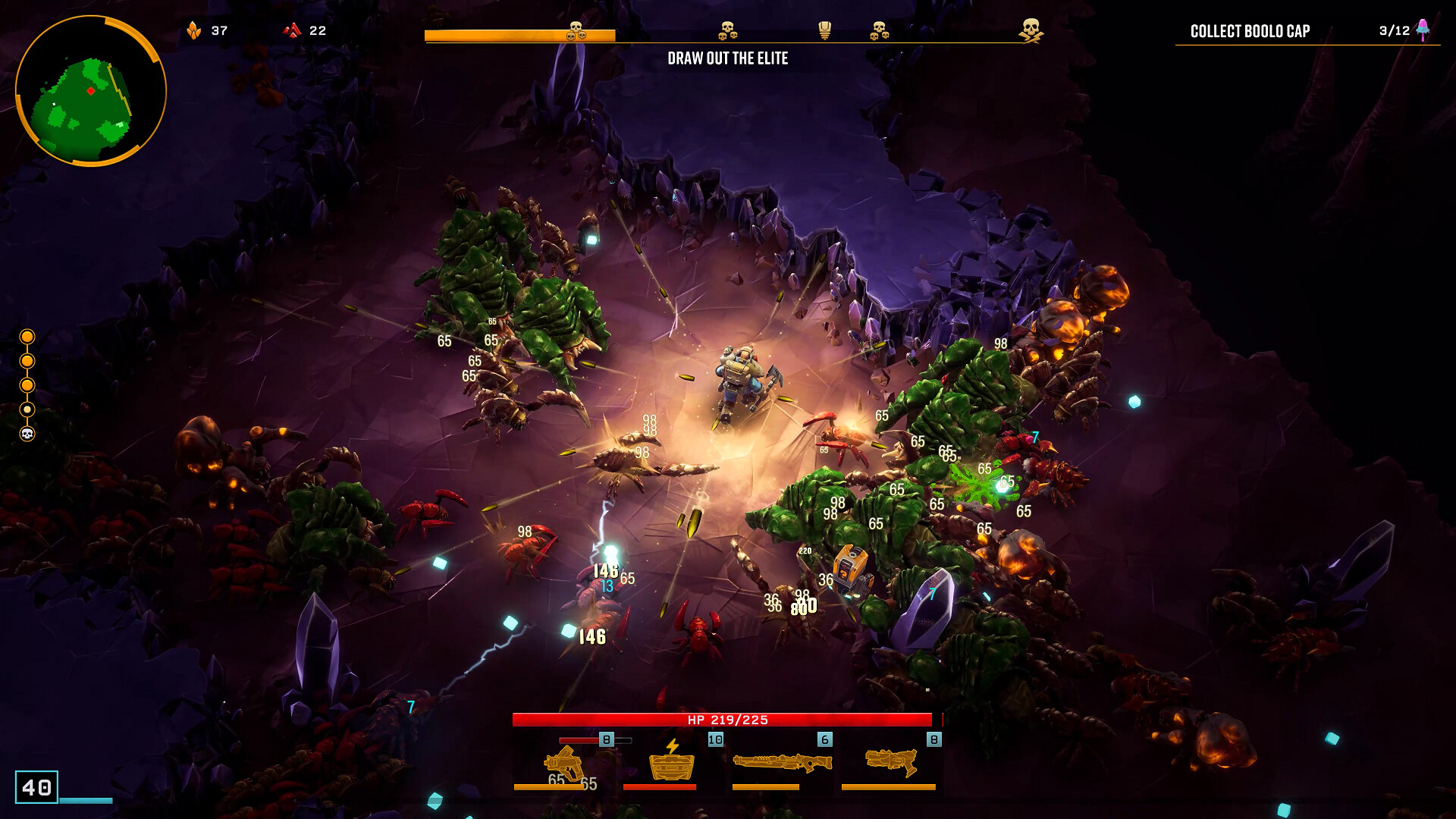
Deep Rock Galactic: Survivor's loop looks like a bullet-heaven on the surface, but the mining half of the name is not decorative. Each cave is procedurally generated, and the walls are full of Nitra and gold that fund your mid-run upgrades. New players tend to treat enemy waves as the main threat and mining as a side activity; flip that instinct. The waves scale to how long you stay, so lingering to carve out every vein without a plan is how a clean run turns into a swarm you can't out-position.
Set a soft personal limit for how deep you push before calling the Drop Pod, and mine with intention on your way there rather than doubling back for stragglers. Early on, a slightly smaller haul you survive to spend is worth more than a bigger one you die holding.
Spend Your First Overclocks and Class Mods on Clear, Not Burst
Deep Rock Galactic: Survivor layers a mastery and overclock system on top of the run-to-run upgrades, and it's tempting to chase the biggest single-hit damage numbers first. Resist that in your first ten or so runs. Crowd-clear and reload speed keep you alive against the waves that actually end early attempts, while burst damage mostly shines against bosses you won't be fighting yet. Each class also earns three Class Mods as you level it, and the generalist options that boost your whole kit are a safer first pick than a mod built around one specific weapon you might not even draw that run.
If you've played the original multiplayer Deep Rock Galactic, resist mapping its loadout logic directly onto Survivor. The classes share names and a little flavor, but Survivor's auto-shooter structure rewards a completely different set of priorities around positioning and economy rather than aim and callouts.
What's Coming Next: The Knockout Update and the Brawler Class
Funday Games used the console launch window to confirm its next piece of content: a free Knockout update to the base game, paired with a paid Knockout Expansion built around a new melee-focused class called the Brawler. The studio's producer framed the console ports and the new content as two parts of the same push to grow the game a year past its original 1.0 launch.
“It's been just over a year since Deep Rock Galactic: Survivor launched into 1.0, and it's incredible how the community seems to tackle even the toughest hazards. Expanding to Nintendo Switch and PlayStation 5 has been a long time coming, and introducing more content has been an absolute blast!”Jacob Laurits Besenbacher Kjeldsen, producer at Funday Games
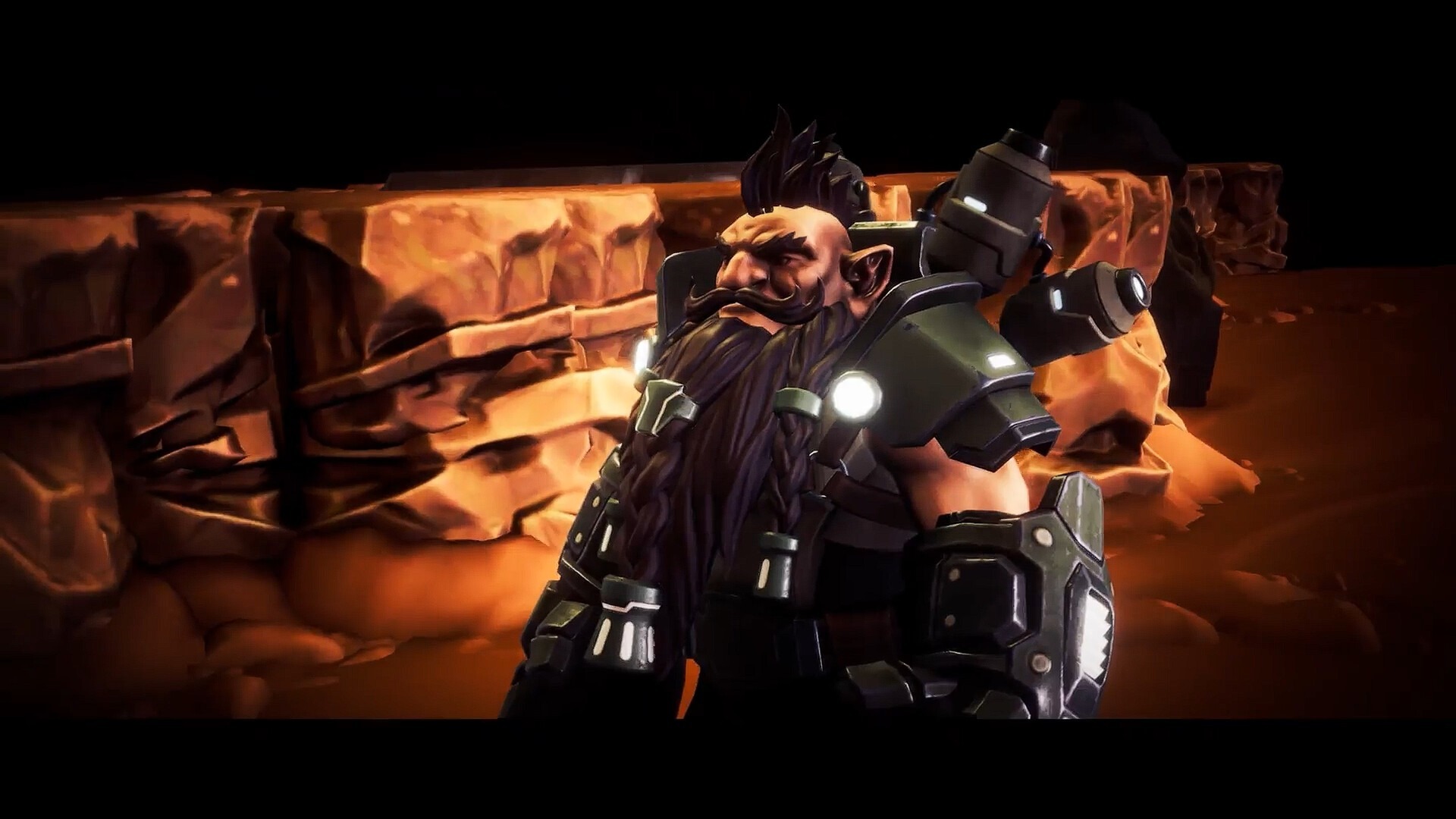
The Brawler trades Survivor's usual ranged kit for close-range weapons built for smashing through enemies by hand, and the expansion adds a new biome, Sandblasted Corridors, along with a high-risk mission called Brood Harvest that sends you after a resource called Kytoplasm while the area's Dreadnought Empress boss and her brood try to stop you. No release date or price has been set yet, and Funday Games says more detail is coming in the weeks ahead, so treat both as confirmed but not yet scheduled.
A Few Habits Worth Building Early
Full controller support was already baked into the PC and Xbox versions, so the control scheme carries over cleanly to PS5 and Switch without any console-specific compromises to learn around. Beyond that, a few habits will save you more runs than any single upgrade choice: check your Drop Pod's remaining distance before committing to a fight at the edge of a cave, don't fight two elite enemies in the open when you can pull one into a corridor first, and treat your first several runs on each newly unlocked class as scouting trips for its kit rather than serious attempts. The jump from console newcomer to someone who reliably reaches the deeper missions comes from those small, repeatable decisions far more than from any one rare drop.
It's also worth remembering that Deep Rock Galactic: Survivor is still being actively supported rather than treated as a finished product the console ports simply inherited. Funday Games has shipped balance passes and bug fixes well past the 1.0 launch, and the Switch and PS5 builds are starting from that same updated base rather than an older snapshot of the game. That matters for a beginner specifically because some of the older written guides floating around online describe numbers and mutators from earlier patches; if a tip you read elsewhere doesn't match what you see in a run, trust what the game shows you over what an older write-up claims.
Finally, don't feel pressure to chase the hardest hazard level your rank allows. Survivor scales its threat to how deep and how long you push, which means a cautious, methodical run on an easier hazard setting will teach you the spacing and upgrade priorities above far better than a chaotic one on a difficulty you're not ready for. Rank up your comfort with each class before you rank up the danger.
Official links
- Deep Rock Galactic: Survivor on Steamstore.steampowered.com
- Official Knockout Expansion announcementstore.steampowered.com
- Funday Games: Deep Rock Galactic: Survivorfundaygames.dk
- Ghost Ship Games press release on the console releasemynewsdesk.com
- Wikipedia: Deep Rock Galactic: Survivoren.wikipedia.org
Sam writes about small studios and the games they ship against the odds, and turns the hardest parts of them into guides that get to the point.