How to Prepare for DLSS 5 in Resident Evil Requiem and Five Other Fall Games
DLSS 5's neural rendering only runs on RTX 50 hardware today, but NVIDIA has confirmed Resident Evil Requiem, Starfield and four more games for this fall.
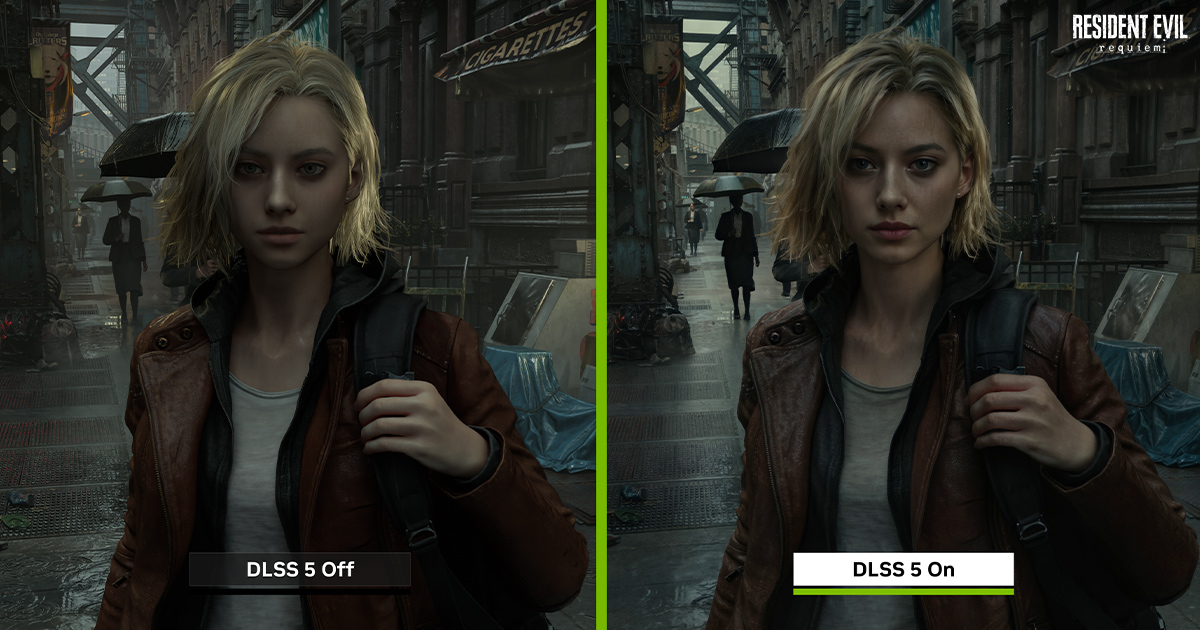
NVIDIA's DLSS 5 announcement promised the biggest jump in real-time graphics since ray tracing arrived in 2018, and the first game to actually ship it, NBA 2K27, has been live since September 3. The catch is that DLSS 5's headline feature, 3D-Guided Neural Rendering, only runs on GeForce RTX 50 Series hardware right now, and the list of games that support it is still short. Here is what the feature actually changes, which PCs and handhelds can use it today, and how to turn it on once a game you own gets the update.
None of this replaces the DLSS most RTX owners already rely on for frame rate. DLSS 5 sits on top of that stack as an image-quality layer, and understanding where it starts and stops will save you from hunting for a setting that a game hasn't shipped yet.
What DLSS 5 Actually Changes
Every earlier DLSS release focused on reconstructing or generating frames to boost frame rate. DLSS 5 does something different: it takes the frame a game has already rendered, along with the game's own 3D geometry, material and lighting data, and runs it through an AI model NVIDIA calls a Pixel Space Diffusion Transformer. The result is a frame with photoreal lighting, skin and hair detail added on top, closer to the fidelity of a Hollywood visual-effects shot than a real-time render. It does not add frames or reduce input lag on its own; it changes how the image looks, not how fast it appears.
In NBA 2K27, NVIDIA points to how light catches hair and skin, and to the facial geometry of real-world athletes, as the clearest examples of what the model is doing frame to frame. That's a useful yardstick for judging any later game that gets the feature: look for finer detail in skin, hair and reflective surfaces rather than a higher frame counter, because DLSS 5 isn't the part of the pipeline responsible for frame rate.
Check Your Hardware First
DLSS 5's neural rendering step needs the fifth-generation Tensor Cores built into GeForce RTX 50 Series desktop and laptop GPUs, and NVIDIA has not extended it to RTX 40, 30 or 20 Series cards. If your GPU predates the RTX 50 line, DLSS 5 itself will not appear as an option no matter how new your driver is; you can still use DLSS 4.5 Super Resolution, which is a separate, broadly compatible feature covered below. The one workaround for non-RTX-50 owners is GeForce NOW: Ultimate-tier subscribers in NVIDIA-operated regions can stream NBA 2K27 with DLSS 5 active, since the rendering happens on an RTX 5080-class rig in the cloud rather than on the device in front of you. NVIDIA's GeForce NOW rundown for the launch lists PCs, Macs, handhelds, mobile devices and TVs as supported endpoints for that stream, which makes it the fastest way to see DLSS 5 running on a Steam Deck or ROG Ally without buying new hardware. Laptop buyers should also check the specific model: DLSS 5 needs an RTX 50 Series mobile GPU, not just an RTX 50-generation laptop with a lower-tier chip inside it.
How to Turn It On
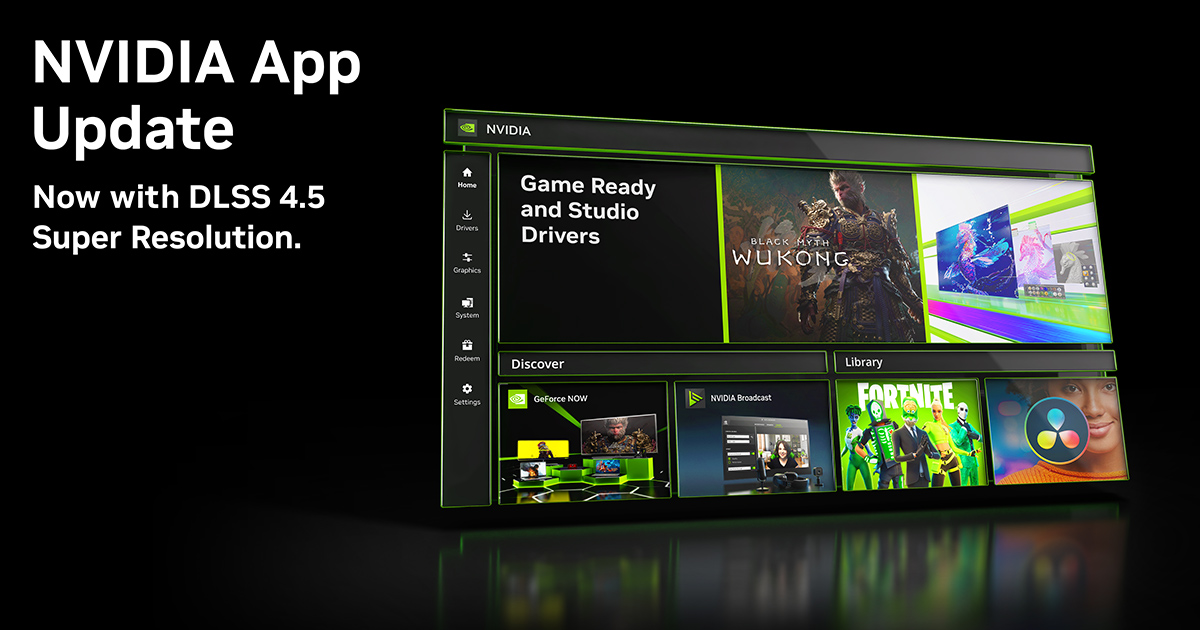
For RTX 50 owners, enabling DLSS 5 has three steps. First, update to the latest Game Ready Driver and the NVIDIA App itself, since older builds won't expose the option. Second, launch a game that has actually shipped DLSS 5 support (right now that means NBA 2K27) and open its own graphics settings; the feature is toggled per-game from an in-game menu, the same way DLSS Super Resolution or Frame Generation are. Third, if the game doesn't show a dedicated DLSS 5 toggle yet, check the NVIDIA App's Graphics tab under Global or Program-specific settings, where DLSS override options for supported titles get added as each patch rolls out. There's no separate installer beyond keeping your driver and app current — NVIDIA has built DLSS 5 on the same Streamline framework as the rest of the DLSS family, so it plugs into existing DLSS games through a patch rather than a new SDK. If a menu option looks greyed out, the most common cause is an outdated driver rather than a hidden setting, so update first and re-check before assuming the game hasn't added support yet.
“DLSS 5 is the GPT moment for graphics — blending hand-crafted rendering with generative AI to deliver a dramatic leap in visual realism while preserving the control artists need for creative expression.”Jensen Huang, Founder and CEO of NVIDIA
Which Games Have It Now, and What's Still Coming
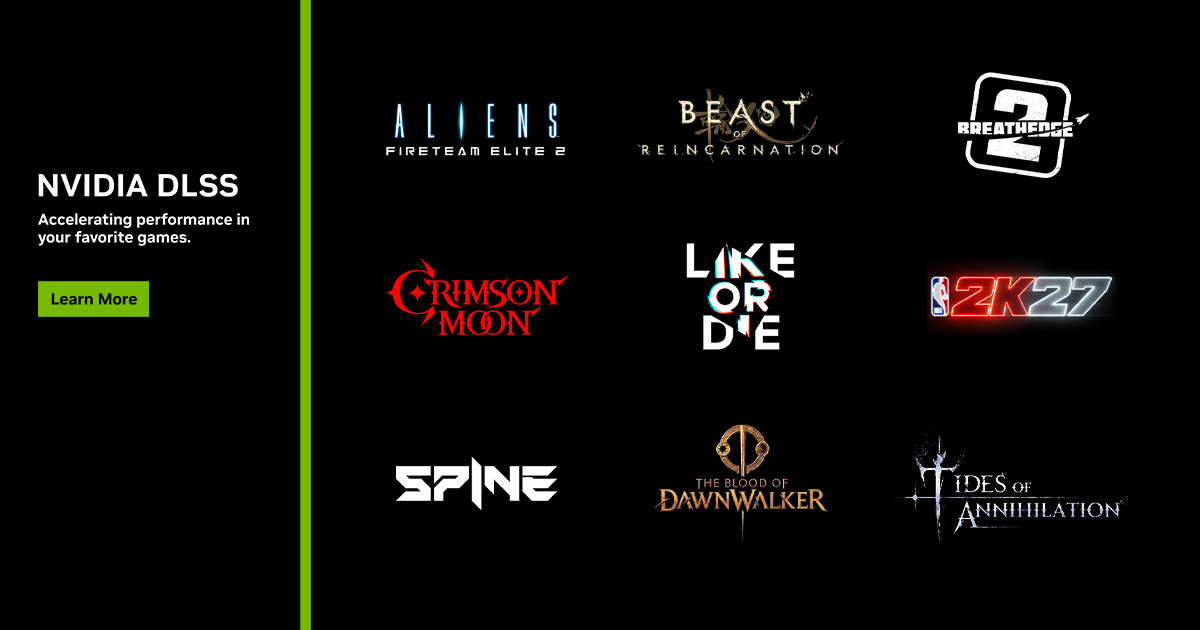
NBA 2K27 remains the only shipping DLSS 5 title as of this week. NVIDIA has publicly committed to bringing it to a longer list of games this fall, including Resident Evil Requiem, Starfield, Assassin's Creed Shadows, Hogwarts Legacy, The Elder Scrolls IV: Oblivion Remastered and Delta Force, plus Onimusha: Way of the Sword and The Blood of Dawnwalker at the DLSS 4.5 Super Resolution tier. None of those patches have gone live yet, so if you jump into Resident Evil Requiem on an RTX 50 card today, you won't find a DLSS 5 option in the settings menu — Capcom hasn't shipped it, and NVIDIA's own materials still describe the game as a "Fall 2026" addition rather than a delivered one. Treat every game on that list as pending until you see the toggle in the settings menu yourself.
Capcom has at least put its name behind the plan publicly. Resident Evil Requiem's executive producer has already framed DLSS 5 as a way to pull players deeper into the game's dread-soaked take on Raccoon City, which is a good sign for the eventual patch even if there's no build to test yet.
Don't Confuse It With DLSS 4.5
DLSS 4.5 Super Resolution is the feature most RTX owners will actually touch this year, and it's worth not mixing the two up. It runs on existing RTX 20, 30, 40 and 50 Series cards through an NVIDIA App update, and it recently added two new upscaling models: Model M, tuned for Performance mode, and Model L, tuned for 4K Ultra Performance mode. A new "Recommended" preset applies those automatically in place of the old "Latest" setting, though RTX 20 and 30 Series owners may still prefer sticking with the earlier Model K, since those GPUs lack the native FP8 support the newer models lean on. DLSS 5 is the RTX-50-exclusive neural rendering layer on top of all that; DLSS 4.5 is the upscaler underneath it that almost everyone with an RTX card can already use. If you update the NVIDIA App and see a new "Recommended" option where "Latest" used to be, that's DLSS 4.5 doing its job, not a sign that DLSS 5 has quietly reached your GPU.
The Quick Checklist
- RTX 50 Series desktop or laptop GPU required for DLSS 5 itself; older RTX cards get DLSS 4.5 Super Resolution instead.
- No RTX 50 card yet: GeForce NOW Ultimate can stream NBA 2K27 with DLSS 5 from the cloud to a handheld, PC or TV.
- Keep the NVIDIA App and Game Ready Driver current, then toggle DLSS 5 from the game's own graphics menu.
- Resident Evil Requiem, Starfield, Hogwarts Legacy and Oblivion Remastered are confirmed but not yet patched — check the in-game settings before assuming it's live.
- DLSS 4.5's new Model M and Model L presets are a separate, wider-reaching update available to most RTX generations now.
"DLSS 5 represents another important step in pushing visual fidelity forward, helping players become even more immersed in the world of Resident Evil.” - Jun Takeuchi, Executive Producer and Executive Corporate Officer
— NVIDIA GeForce (@NVIDIAGeForce), March 16, 2026 on X
Official links
Lena tests the hardware that games run on, from handheld thermals to controller latency. If a spec sheet is doing something suspicious, she has already opened the device.