How to Solve Puzzledorf's New Ruins Match-3 Jewel Puzzles
Puzzledorf's free Ruins update mixes match-3 jewels into its Sokoban formula. Here's how the new sliding-jewel mechanic works and how to solve it.
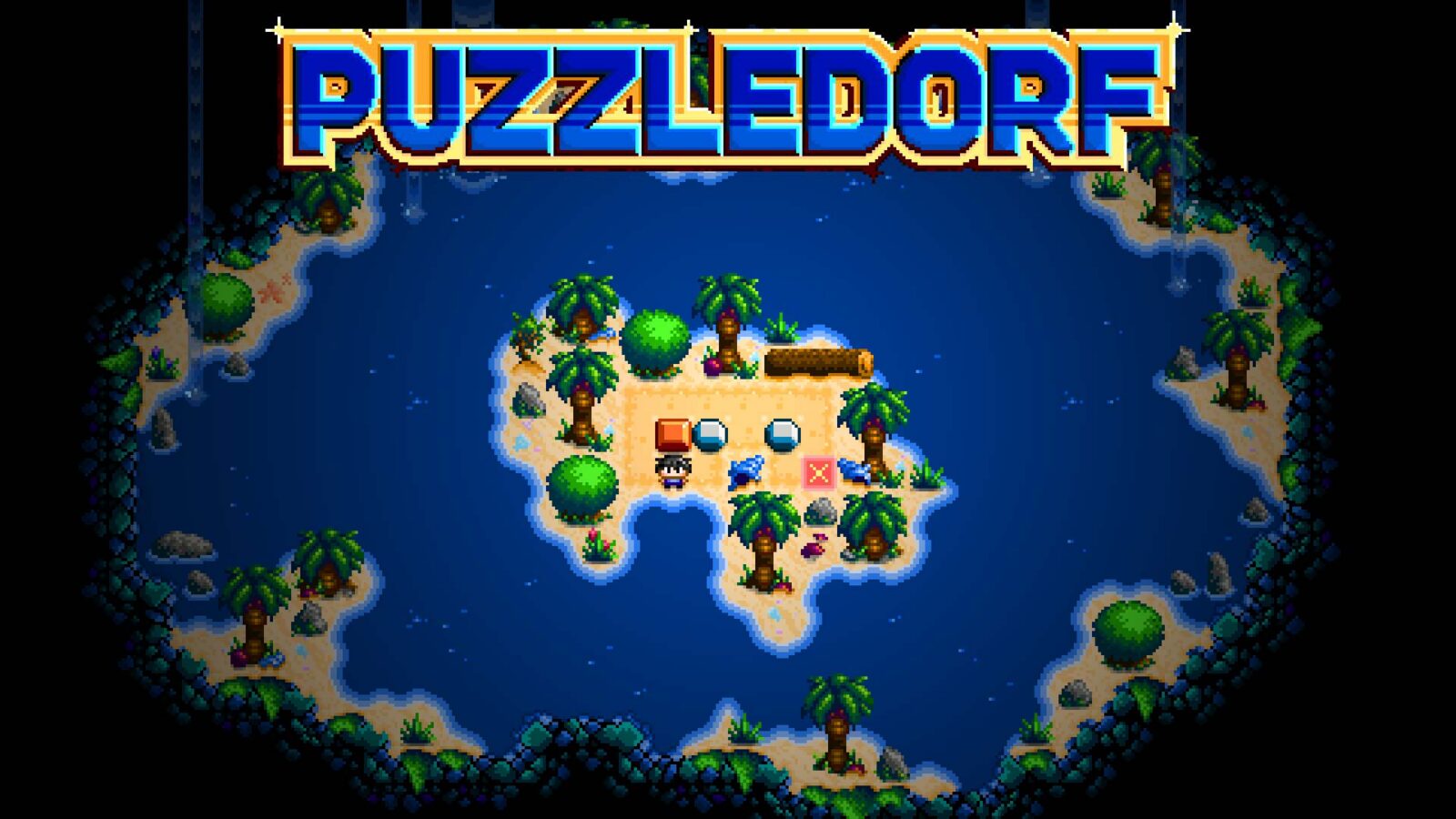
Puzzledorf, the chill pixel-art block-pusher built solo by Stuart Burfield, just received its biggest content drop since launch. The free "Ruins" update went live on Steam on September 24, 2026, adding more than 32 new levels across three new worlds and a puzzle mechanic the game has never used before: match-3 jewels layered on top of its familiar Sokoban block-pushing. If you have cleared every log and boulder in the base campaign and want to know exactly how the new Ruins puzzles work before diving in, here is what changed and how to approach them.
What the Ruins Update Actually Adds
The Ruins is not a reskin of existing levels. Per the developer's own update announcement, the patch adds over 32 brand-new levels spread across three new worlds, a fresh set of Steam achievements tied to Ruins content, and eleven newly supported languages, including German, French, Japanese, Chinese and Korean. The update is free for anyone who already owns Puzzledorf and released simultaneously for Windows, macOS and Linux on Steam. It is not entirely new to the game, though: the same content launched as a timed Xbox exclusive back on August 31, 2026, as part of Puzzledorf's Xbox Play Anywhere debut, giving console players roughly a three-week head start before Steam caught up.
How the Match-3 Jewel Mechanic Works
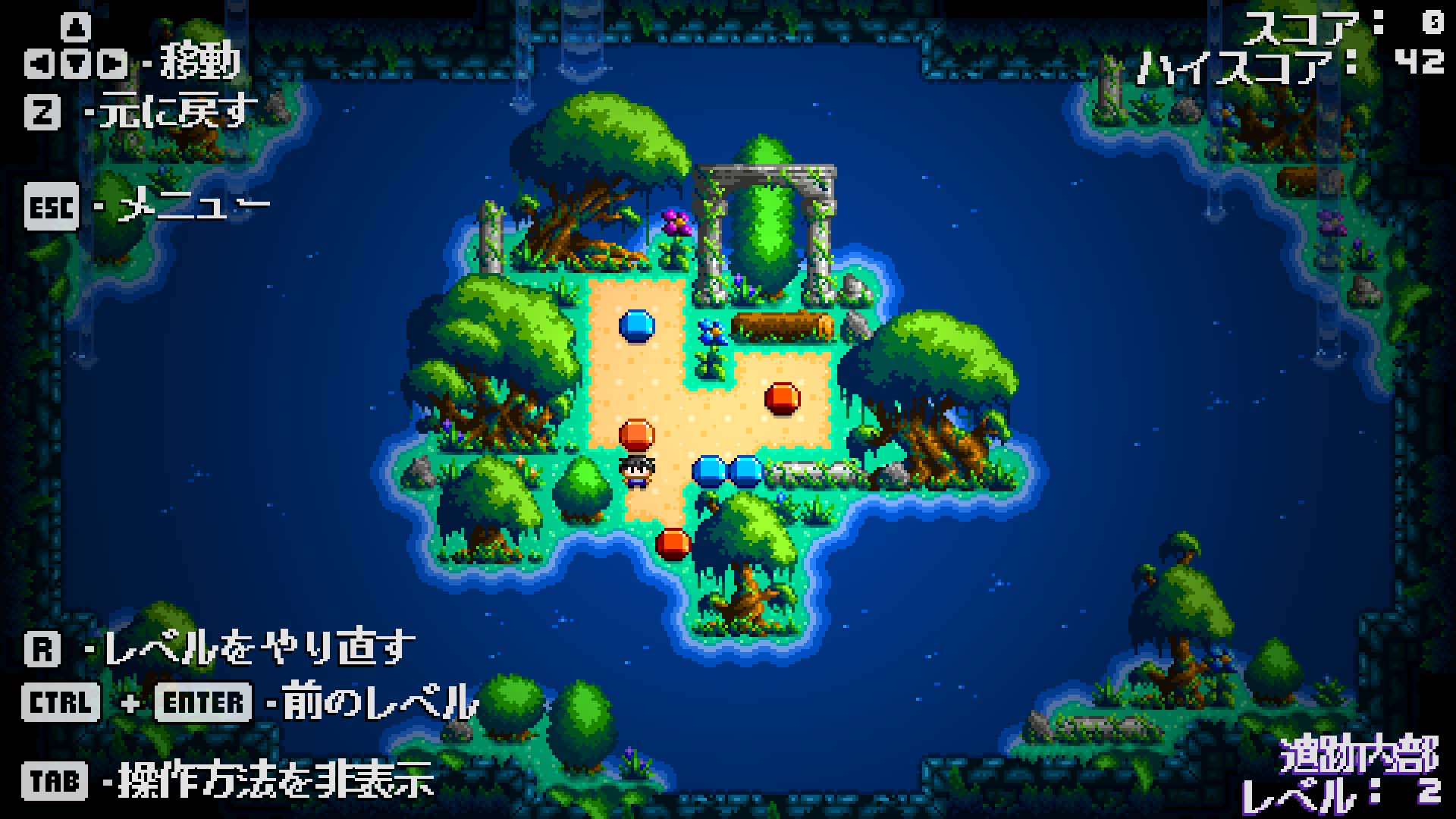
Every prior Puzzledorf world runs on the same rule: push a colored block until it hits a wall, another block, or the edge of the level, then line it up with its matching target tile. The Ruins keeps that pushing logic but swaps the win condition. Instead of parking a single block on a single target, you are pushing jewels that slide across the floor until they collide with an obstacle, and your goal is to gather three jewels of the same color together so they clear from the board. Clear every jewel and the level is solved.
That sliding behavior is the part newcomers misjudge first. A jewel does not stop where you'd expect a normal Sokoban block to stop; it keeps sliding past empty tiles until something physically blocks it, whether that is a wall, a rock, another jewel, or a piece of Ruins scenery. Developer Stuart Burfield described the core idea plainly in Puzzledorf's Xbox announcement: "In the new Ruins puzzles, classic Sokoban gets a twist: match three jewels of the same colour to clear them." The challenge is entirely in predicting where a slide will end, then using that prediction to set up the next one.
Step-by-Step Strategy for Early Ruins Levels
The opening Ruins levels are built to teach the slide-and-match rule gradually, so treat your first few attempts as reconnaissance rather than a race:
- Map the obstacles before you move anything. Because jewels slide until they hit something solid, the position of every rock, log and wall boundary determines exactly where a jewel can stop. Scan the level layout first.
- Push the far jewel before the near one. If two jewels of the same color sit on opposite sides of open floor, moving the farther one first usually lets it slide into range of the nearer one without needing a third obstacle.
- Use other jewels as walls. A jewel that has already stopped becomes an obstacle for the next one you push, which is often the only way to stop a slide in open areas that lack rocks or logs.
- Undo liberally. Puzzledorf's unlimited undo and no-timer design, unchanged from the base game, applies fully to Ruins levels, so there is no penalty for testing a slide, seeing where it lands, and backing out if it overshoots.
Mistakes That Waste Your Moves
A handful of habits from the base game will actively work against you in the Ruins, so it is worth unlearning them early. The biggest one is pushing a jewel toward a cluster without first checking what lies beyond it: because a jewel slides through every open tile until something solid stops it, a jewel aimed at a distant obstacle will barrel straight past a same-color match sitting closer along that path, scattering the layout instead of clearing it. It is also easy to assume a jewel will behave like a Puzzledorf block and stop after one tile out of habit, then be surprised when it slides the full length of an open corridor.
- Do not push before counting the open tiles. If the path ahead is clear all the way to a wall, that is exactly how far the jewel will travel.
- Watch for chain reactions. Clearing one match-three cluster can open a corridor that changes where the next jewel you push will stop, so re-scan the board after every clear rather than assuming the layout is unchanged.
- Save awkward jewels for last. A jewel stuck against a wall with no same-color partner nearby is often meant to be used as a backstop for a later push, not solved immediately.
Tools Carried Over From the Base Game Still Matter
Nothing about the Ruins update strips out Puzzledorf's existing accessibility and quality-of-life features, and they are worth leaning on while you learn the new mechanic. Mirror Mode, which flips a puzzle's layout so returning players cannot lean on a memorized solution, applies to Ruins levels the same way it does to the base campaign, so replaying a cleared Ruins level in Mirror Mode is a genuine test of whether you understand the slide-and-match logic or just memorized one path. Colorblind options remain available for distinguishing jewel colors, which matters more here than in the base game since matching now depends on reading color at a glance across a moving object rather than a stationary one. Progress and achievements sync through Steam Cloud, so switching between a Steam Deck session and a desktop PC will not cost you Ruins progress.
“In the new Ruins puzzles, classic Sokoban gets a twist: match three jewels of the same colour to clear them.”Stuart Burfield, owner, Stuart's Pixel Games
Where the Ruins Fits Into a Longer Puzzledorf Session
Because the three new Ruins worlds sit alongside, rather than replace, Puzzledorf's original block-pushing worlds, the most efficient way to learn the new mechanic is to finish at least one full original world first. The slide-and-match jewels borrow directly from the pushing logic the base game already taught, and jumping into the Ruins cold means learning two systems at once instead of one. Once the core push-and-collide instinct is second nature, the added step of tracking jewel colors and match-three clusters is a smaller leap than it looks from the outside.
Burfield has said mobile support is being explored for a future release, but for now the Ruins is Steam and Xbox only, priced the same as the base $9.99 game since it ships as a free update rather than paid downloadable content. Full mechanical details and a level-by-level breakdown are being filled in on the official Puzzledorf Wiki as players work through the new worlds, and the official Puzzledorf site links to the current demo if you want to try the sliding-jewel mechanic before committing to the full game.
Official links
Sam writes about small studios and the games they ship against the odds, and turns the hardest parts of them into guides that get to the point.