How to Survive No Such Place: Gunsmith Builds, Safe House Tips Explained
ChillyRoom's new top-down extraction shooter left Early Access October 13. Here is how its Gunsmith crafting, Safe House upgrades and squad runs work.
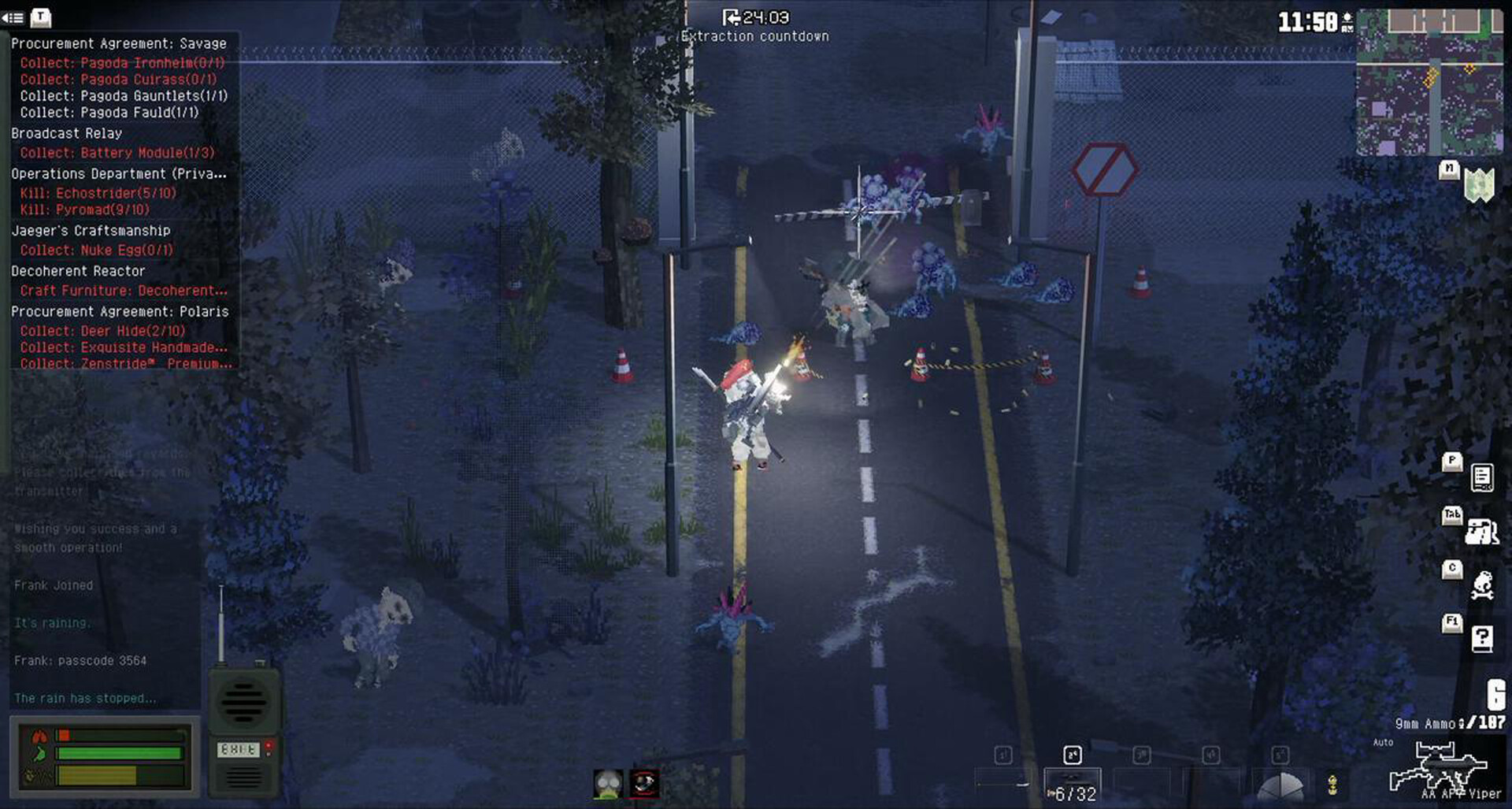
ChillyRoom and CritTeam's No Such Place left Steam Early Access on October 13, dropping players into the Unknown Research Consortium with little more than a rifle, a backpack and a countdown clock. The top-down PvE extraction shooter borrows its tension from games like Escape from Tarkov but plays it from a bird's-eye view, sending solo agents or four-player squads into irradiated "Dimensional Fragments" to scavenge gear, finish contracts and reach an evacuation point before time runs out.
The game's two deepest systems, Gunsmith weapon crafting and Safe House base-building, are also its least explained on a first run. Here is how both actually work, along with what a typical extraction mission looks like and what to expect from the year-plus Early Access period ChillyRoom has planned.
What No Such Place Actually Is
You play an agent of the U.R.C., sent to investigate "broken dimensional fragments" after reality itself starts fraying. Each fragment is a self-contained map stitched together from different biomes: abandoned research facilities, deserted military outposts, forests burning with an eternal flame, and high-altitude snowfields. The opening region, Origin-00, is a forest zone packed with named locations like the Laboratory, Military Outpost, Train Station and Lima Lake Town, each one worth raiding for supplies.
The threats are twofold. Mutated creatures, the game calls some of them Echostriders and Pyromads, roam the map and get more aggressive after dark, while rival U.R.C. factions and "mercenaries" complicate fights over the same loot. You can drop in alone or form a squad of up to four agents on the game's Steam store page, which also lists full online and LAN co-op support.
How the Gunsmith System Actually Works
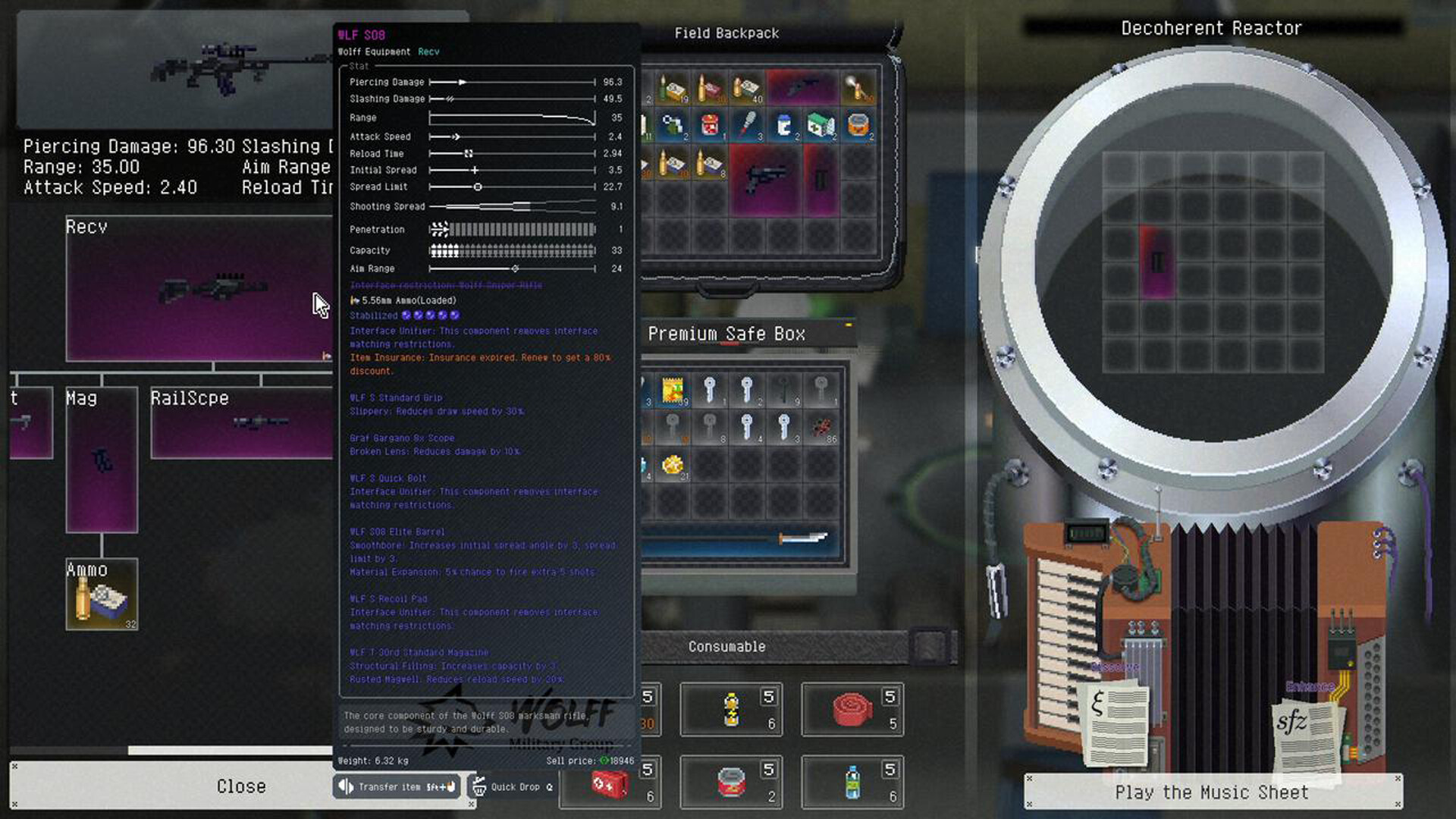
Every weapon in No Such Place is built, not just found. The Gunsmith screen breaks a gun down into its receiver, barrel, magazine, scope and grip, and every part you slot in changes real, visible stats: piercing and slashing damage, range, attack speed, reload time, spread and penetration. A sniper build like the Wolff Equipment WLF S08 shown in the game's own marketing material swaps in a "Quick Bolt" for faster cycling or a "RailScpe" for a flatter sightline, and each swap is reflected immediately in the numbers on screen.
The system's twist is corruption. Push a weapon far enough outside its intended specifications, stacking modifiers like "Material Expansion" for a chance at extra shots, and the gun develops visible dark violet patterns across its surface. At that point, according to ChillyRoom's own description of the system, "compatibility no longer applies." A corrupted build can become a genuinely overpowered weapon, or it can misfire into something closer to a live grenade. There is no way to know which until you pull the trigger, which is the entire point: every Gunsmith session is a real decision between a safe, predictable loadout and a gamble that might carry you through an entire run.
New players should treat their first few Gunsmith sessions as cheap experiments rather than committing scarce resources. Parts recovered from early Dimensional Fragment runs are rarely rare enough to be precious, so the safest way to learn which combinations push a weapon into corruption is to try them on gear you would not miss.
Turning Your Safe House Into a Base
Everything you scavenge is worthless if it never makes it home. Agents return between missions to a Safe House that starts as a bare room and expands through its own Furniture menu, split into Facility and standard categories. Early unlocks include a Basic Workbench for crafting, a Cooking Station, a Basic Medical Station, beds to speed up recovery, and storage crates to keep a growing inventory organized.

ChillyRoom frames this explicitly as a logistics loop: haul back resources, maintain gear, reinforce facilities, and turn "junk" into the tools for the next, steadier run. In practice that means prioritizing a workbench and basic storage before anything else, since both directly reduce how much time you waste managing inventory mid-mission. A Cooking Station is worth unlocking early too, since consumables like the game's canned rations restore hunger, hydration and blood sugar stats that otherwise drain steadily during a run.
How a Mission and Extraction Actually Plays Out
Drop into a Dimensional Fragment and you are handed a running mission list pulled from several in-game factions at once: Broadcast Relay objectives asking you to collect specific modules, Operations Department bounties on named mutant types, and procurement contracts for armor sets or crafting materials. None of it is mandatory. You can ignore every contract and simply loot, but completing them is the fastest way to unlock better Gunsmith parts and Safe House furniture.
The map itself marks several Evacuation Points around its edges rather than a single fixed exit, so the real-time decision on every run is which one to run for once your area goal is done, your bag is full, or a fight has gone badly. An onscreen extraction countdown starts once you commit to leaving, during which you are still vulnerable to both the local wildlife and any other agents converging on the same point. Squads that stick together during this window recover far more often than solo agents who get caught in the open, which is the main argument for running with a full four-person team once you have the gear to support it.
Pricing, Platforms and What Early Access Means Here
No Such Place is PC-only through Steam, priced at $17.99 with a 14% launch discount bringing it to $15.47 through October 27. ChillyRoom has said on the store page that Early Access will run for at least a year, and that the three maps available at launch currently ship with their main missions complete but their side content still filling in. A full 1.0 release is planned to add more missions, gear and perks at a higher price, so anyone buying in now is getting the current build rather than the finished game.
For patch-by-patch changes, ChillyRoom posts updates through the game's own Steam news hub, and background on the setting is available on the developer's official No Such Place site. Given how central both Gunsmith and Safe House progression are to surviving later Fragments, players who jump in during Early Access should expect those systems, and the maps built around them, to keep expanding well into 2027.
Official links
Sam writes about small studios and the games they ship against the odds, and turns the hardest parts of them into guides that get to the point.